

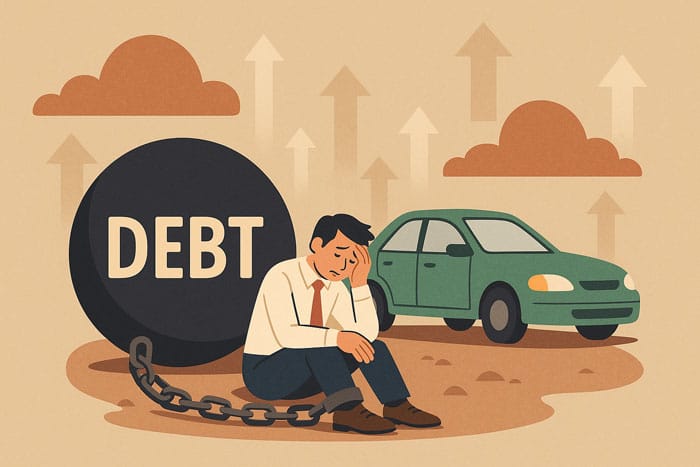
It’s tough to get by without a car in California. You probably live too far away from work or school to walk, and maybe even too far to bike. You could take the bus, but then you’re at the mercy of the bus’s schedule. With a car, you have the freedom to go where you want, when you want. But cars are expensive, and most people can’t afford to just buy one in cash. That’s where the car financing industry comes in —you can take out an auto loan and pay off your car over time.
As of Q2 of 2025, there were more than 100 million auto loans outstanding in the United States, for a total outstanding balance of $1.66 trillion. 5% of that debt, or about $83 billion, is at least 90 days past due.
An auto loan, like any other kind of loan, comes with an application process. You’ll have to fill in your financial information and the auto lender will run a credit check. If your credit is high enough and your income is stable enough, you’ll get the loan. If you have no credit or low credit, however, you may have a much harder time getting approved.
That’s where subprime lenders come in.
How does bad credit car financing work?
Your credit score represents the risk that you’ll default. The lower your score, the higher the risk that you won’t be able to pay off your bills. That’s why lenders check it — they want to know whether you’re likely to pay them back. So why are some lenders providing bad credit car financing if the borrowers are more likely to default?
They’re not doing it out of the goodness of their hearts. They make up for the riskiness of the loans by charging higher interest rates. In other words, the loans are much more expensive than traditional car loans from banks and credit unions. For example, a loan on a new car worth $20,000 in California made to a borrower with a “poor” credit score between 600 and 649 could come with an interest rate of over 8.75%; that same loan made to a borrower with a credit score below 599 could result in interest of more than 11.5%.
In contrast, average car loan rates for prime borrowers are well under 5%.
Bad Credit Car Loan Rates
As mentioned above, these loans can help people with bad credit get cars that they otherwise couldn’t. The problems arise with the terms of the loans.
First, these loans are expensive. According to Experian, the average rate for a new car loan in Q2 of 2025 was 6.8%. The average for a used car loan was much higher, at 11.54%. But subprime borrowers–those with credit scores between 501 and 600–can expect to pay much more. For those borrowers, the average new car loan rate is 13.38%, and the used car rate is 18.9%. Deep subprime borrowers with scores of 500 or below pay still higher rates.
Second, the majority of bad credit car financing goes toward used cars and the average loan has a 6-year maturity. Cars depreciate quickly, and this setup puts borrowers at a high risk of owing more than their cars are worth if they try to sell them down the road. In addition, if you default and your car is repossessed, you may face a collection lawsuit and wage garnishment for any deficiency (the difference between what your car sells for and what you owe).
To make matters worse, used car prices rose significantly during the Covid-19 pandemic and failed to settle back to previous rates. That means car payments are higher and many borrowers are forced to consider longer loans. While stretching out car payments over a longer period lowers monthly payments, it increases the total amount of interest paid and increases the risk of default.
I’m Struggling to Make Payments. What can I do?
High risk car loans have a lot of downsides, but many people have relied on them for much-needed transportation. Now, even that market is tightening.
If you have a high interest loan due to bad credit and your credit score has improved, you may be able to refinance your loan at a lower rate. But, that isn’t always an option. Interest rates overall are higher in 2025 than they were a few years ago. And, depending on the value of your car and the outstanding balance, you may owe more than you can finance.
If you’re dealing with temporary financial trouble, you can work with your lender. Let them know what’s going on, how you’re planning to remedy the situation, and how long you expect it to take. They make the most money when you keep paying, so they’re frequently willing to work with you to help you get through a rough patch. They may delay your payments for a couple of months or lower your interest rate, for example.
If you can’t refinance and you don’t expect your financial situation to change anytime soon, it may be time to consider getting out of the loan. You can voluntarily surrender your car, but remember that it’s treated the same way as a repossession on your credit report. You may also consider filing a bankruptcy. It won’t wipe out your car debt, but it will wipe out credit card, medical, and other unsecured debts to free up some cash. That may allow you to reaffirm your car loan and be in a better position to keep up the payments. If you don’t reaffirm, bankruptcy can wipe out your personal liability for the car. You may still lose the car, but you won’t be on the hook for any deficiency balance.
The Bottom Line
Subprime lending was at the root of the housing crisis in 2008 and some experts are concerned that the subprime auto loan market will be the next to fail. Two recent industry failures have increased that concern. If you’re struggling with bad credit car financing, we may be able to help. Contact our experienced Los Angeles bankruptcy attorneys today.